In the summer of 1483, two young princes disappeared into the imposing fortress of the Tower of London, never to be seen alive again. Their vanishing sparked one of history’s most enduring murder mysteries—a five-century-old cold case involving royal intrigue, political ambition, and questions that have haunted historians ever since. Were they murdered by their uncle, the notorious Richard III? Did they escape to live anonymous lives? Or does the truth lie somewhere even darker?
The Young Heirs
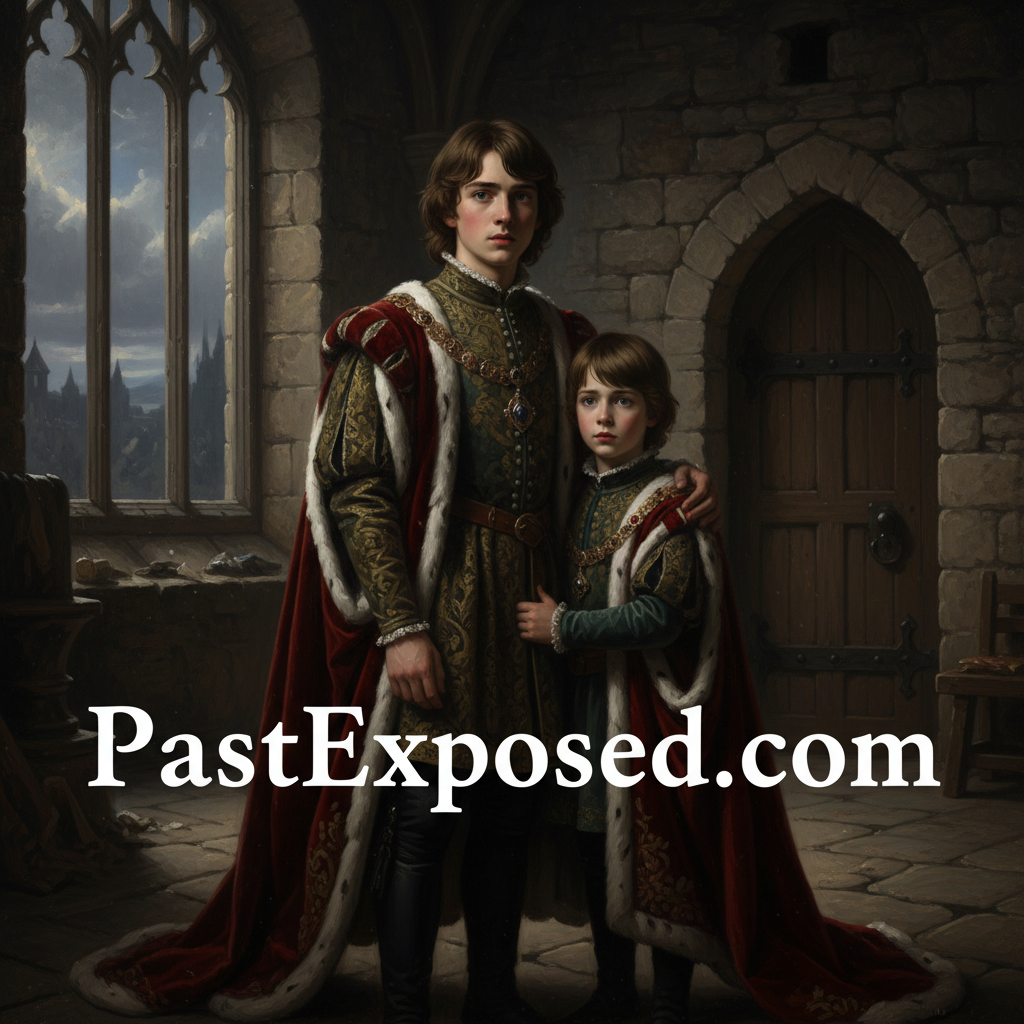
Edward V was just twelve years old when his father, King Edward IV of England, died unexpectedly on April 9, 1483. The boy king had been groomed for the throne his entire short life, the beloved eldest son of a powerful monarch. His younger brother, Richard of Shrewsbury, Duke of York, was only nine—a bright, lively child who idolized his older brother.
The boys should have been safe. Edward was to be crowned king within weeks, with his mother Queen Elizabeth Woodville serving as regent until he came of age. Richard would support his brother as a trusted royal duke. The future of the House of York seemed secure.
But in the vicious world of 15th-century English politics, children—even royal children—were pawns in a deadly game.
The Protector
Richard, Duke of Gloucester, was the boys’ uncle—their late father’s younger brother and one of England’s most experienced military commanders. Loyal to Edward IV during his lifetime, Richard had been named Lord Protector, tasked with guiding his young nephew until the coronation.
On May 4, 1483, Richard intercepted young Edward V on his journey to London and took custody of the boy, reportedly for his own protection. The prince’s guardians were arrested, some later executed. Edward was brought to London and lodged in the Tower—not unusual, as the Tower served as a royal residence, and English monarchs traditionally stayed there before their coronations.
What happened next changed the course of English history.
Into the Tower
On June 16, 1483, young Richard of York was persuaded to leave Westminster Abbey, where his mother had taken sanctuary with her daughters. The official explanation: his brother Edward was lonely and wanted company. The younger prince joined his brother in the Tower’s royal apartments.
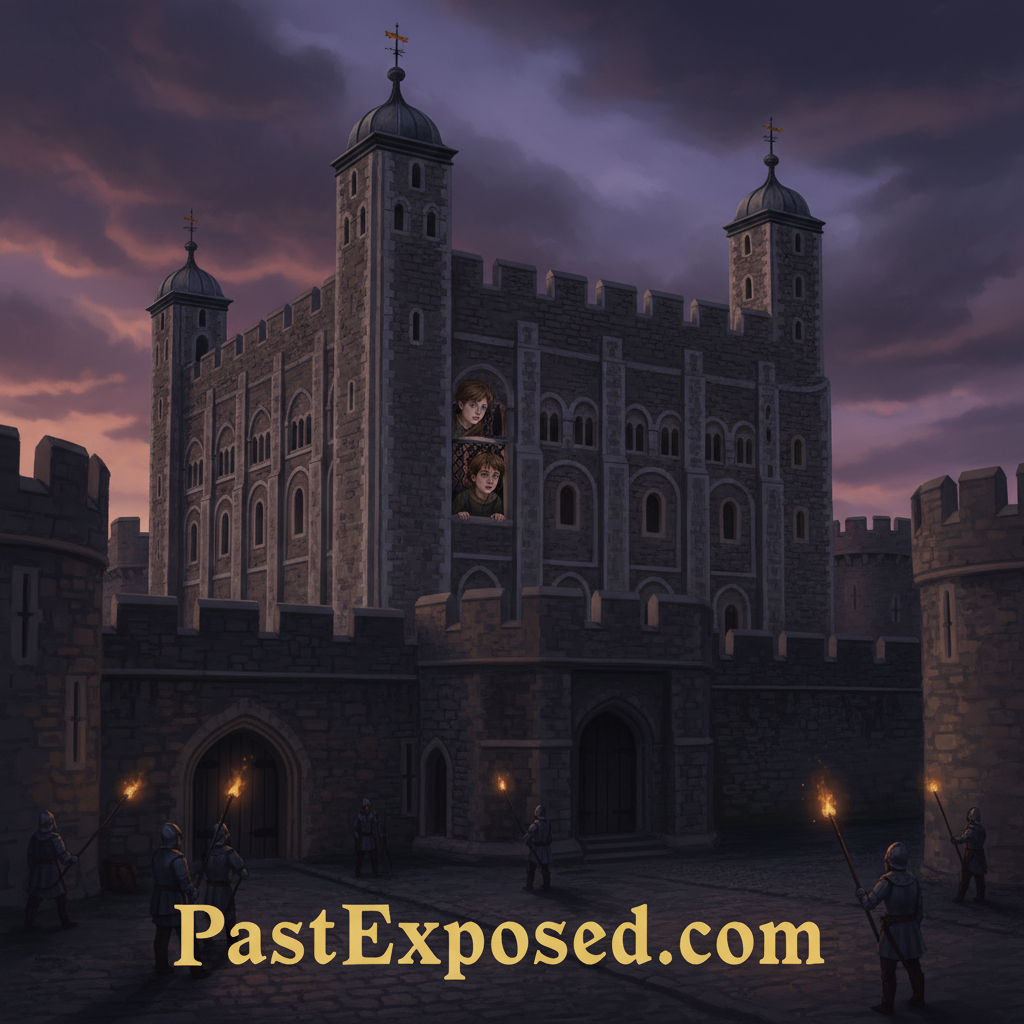
For several weeks, London citizens reported seeing the boys playing in the Tower gardens, shooting arrows, and appearing at windows. But gradually, these sightings became less frequent. By mid-July 1483, the princes were seen no more.
What happened during those summer weeks? The answer lies in a series of events that would seem incredible were they not documented history.
The Usurpation
On June 22, just days after both boys were in the Tower, Richard III had a clergyman named Ralph Shaa preach a sermon at Paul’s Cross, claiming that Edward IV’s marriage to Elizabeth Woodville had been invalid. The reasoning: Edward had supposedly been pre-contracted to marry another woman before his marriage to Elizabeth, making all their children illegitimate.
It was a convenient claim—and one that made the two princes bastards with no right to the throne. On June 25, an assembly of nobles and clergy formally requested that Richard assume the crown. On July 6, 1483, Richard III was crowned King of England.
The boys’ coronation clothes, already prepared, were never used. Edward V, who had been king for 78 days without ever being crowned, ceased to exist in official records. He and his brother simply vanished from history.
The Whispers Begin
By autumn 1483, rumors swept through London and beyond: the princes were dead, murdered on their uncle’s orders. The stories varied in their gruesome details, but all agreed on the essential facts—the boys had been killed, and Richard III was responsible.
Dominic Mancini, an Italian visitor to London, recorded that the boys were seen less and less frequently at the Tower windows, and then not at all. He wrote that many men wept for the fate of the innocent children. The English chronicler, writing later, claimed that Richard had the boys smothered with pillows as they slept.
But were these accounts true? Or were they Tudor propaganda, written after Richard’s defeat?
The Tudor Version
In August 1485, Richard III was killed at the Battle of Bosworth Field, ending the Wars of the Roses. Henry Tudor, a distant claimant with a weak hereditary right, took the throne as Henry VII, founding the Tudor dynasty.
Under the Tudors, Richard III became a monster—Shakespeare would later immortalize him as a hunchbacked villain, a serial killer who murdered his way to power. The official Tudor narrative claimed Richard had ordered Sir James Tyrell to kill the princes, who were smothered in their beds and buried at the foot of a staircase in the Tower.
Sir Thomas More, writing during the reign of Henry VIII, provided the most detailed account: Tyrell hired two assassins, Miles Forest and John Dighton, who crept into the princes’ chamber at night and pressed pillows over their faces until they suffocated. The bodies were then temporarily buried beneath a staircase.
But More was writing decades after the events, had never met Richard III, and served the Tudor court. His account, while compelling and detailed, cannot be verified—and he himself admitted he wasn’t certain if all the details were accurate.
The Discovery
In 1674, workmen demolishing a staircase in the Tower of London made a grisly discovery: a wooden chest containing the bones of two children, buried about ten feet beneath the stairs.
Could these be the murdered princes?
King Charles II, convinced they were the remains of Edward V and Richard of York, had the bones placed in an urn and interred in Westminster Abbey, where they remain to this day in a marble tomb designed by Christopher Wren.
In 1933, the bones were examined by medical experts. They concluded the remains were of two children, one aged 12-13, the other aged 9-11—consistent with the princes’ ages in 1483. However, the examination was brief and limited by the technology of the time. Modern forensic scientists have requested permission to conduct DNA analysis, but the Royal Family and Westminster Abbey have repeatedly denied these requests.
Why? What truth might the bones reveal—or conceal?
Alternative Theories
Not everyone believes Richard III murdered his nephews. Revisionists point to several problems with the traditional narrative:
Lack of Contemporary Evidence: No document from Richard’s reign mentions the princes’ deaths. No trials were held, no bodies were displayed. If Richard wanted to eliminate threats to his throne, why not formally execute the boys for treason, as was common practice?
Richard’s Character: Modern historians note that Richard had governed the North of England with justice and efficiency before becoming king. He was a capable administrator and military leader. While 15th-century politics were brutal, Richard showed no pattern of murdering children or family members.
Tudor Motive: Henry VII had far more reason to want the princes dead than Richard did. If the boys lived beyond 1485, they posed a direct threat to Henry’s shaky claim. Several pretenders claiming to be the younger prince would challenge Henry’s rule, suggesting rumors of survival persisted.
The Bones’ Uncertainty: The 1933 examination was inconclusive about the bones’ age, sex, or even whether they were from the same period. They could have been children who died centuries earlier—the Tower was over 600 years old when the bones were discovered.
The Pretenders
The most tantalizing evidence that the princes might have survived came in the form of two young men who emerged years later, each claiming to be one of the lost boys.
Lambert Simnel appeared in 1487, claiming to be Edward, Earl of Warwick (another young royal imprisoned by Henry VII). Some historians believe he was actually meant to impersonate one of the princes. Henry VII defeated Simnel’s rebellion and, curiously, didn’t execute the pretender but employed him as a servant—suggesting he knew the boy was no real threat.
Perkin Warbeck was more compelling. Appearing in 1490, he claimed to be Richard of York, the younger prince, who had miraculously escaped the Tower. Warbeck knew intimate details of the royal family and was recognized as the prince by several European monarchs and even by some English nobles. He was physically similar to the House of York.
For nearly a decade, Warbeck challenged Henry VII, receiving support from foreign powers and launching invasions of England. He was finally captured in 1497 and executed in 1499—but not before he had spent years convincing many that he truly was the lost prince.
Was Warbeck an imposter, as Tudor historians claimed? Or was he genuinely Richard of York, survivor of a royal murder plot? If the latter, who killed his brother? And who helped him escape?
Modern Investigations
In 2012-2013, archaeologists made a stunning discovery: the skeleton of King Richard III, found beneath a parking lot in Leicester. DNA analysis confirmed his identity, and forensic examination revealed he did suffer from scoliosis (though not the monstrous hunchback of legend).
This discovery reignited interest in the princes’ fate. Researchers hoped that DNA from Richard III could be compared with the bones in Westminster Abbey to definitively prove or disprove whether they were his nephews.
The request was denied. The bones remain sealed in their tomb, their secrets preserved.
Why would authorities refuse a test that could solve a 500-year-old mystery? Some suggest the Royal Family fears the results might be inconclusive—or worse, might prove the bones aren’t the princes at all, throwing the entire historical narrative into chaos.
What Really Happened?
Five centuries later, we’re left with competing theories and no definitive answer:
Theory 1 – Richard Did It: The traditional view holds that Richard III, fearing the princes posed a threat to his rule, had them murdered in August-September 1483. The bones in Westminster are theirs, and the mystery is solved—except for the lack of contemporary evidence and Richard’s failure to announce their deaths.
Theory 2 – Henry Did It: Some revisionist historians argue the boys survived Richard’s reign but were killed after Henry VII took power in 1485. Henry had more motive and opportunity, and the pretenders who challenged his rule suggest rumors of survival persisted. Henry’s descendants then blamed Richard to justify their own usurpation.
Theory 3 – They Escaped: Perhaps the most romantic theory holds that one or both princes escaped the Tower and lived in obscurity. Perkin Warbeck may genuinely have been Richard of York. This would explain the lack of bodies during Richard’s reign and the persistent reports of survival.
Theory 4 – Death by Other Causes: Some historians suggest the boys may have died of natural causes—plague, illness, or accident—and Richard covered up their deaths to avoid scandal. This would explain his silence on the matter.
Theory 5 – Buckingham’s Rebellion: Another theory points to Henry Stafford, Duke of Buckingham, Richard’s former ally who rebelled against him in October 1483. Some scholars believe Buckingham killed the princes without Richard’s knowledge, possibly hoping to claim the throne himself.
The Weight of History
The disappearance of Edward V and Richard of York marks one of the most significant murders—or alleged murders—in English history. Their fate changed the course of the nation, ended the Plantagenet dynasty, and brought the Tudors to power.
If Richard III murdered the princes, he was a calculating killer who destroyed his own family for power. If he was innocent, he was the victim of the greatest character assassination in history, his reputation destroyed by his enemies.
And if the boys somehow survived? Then the entire narrative of English history is built on a foundation of lies and uncertainty.
The bones in Westminster Abbey hold the truth, locked in their DNA, sealed in their marble tomb. Until modern science is allowed to examine them properly, the fate of the Princes in the Tower remains one of history’s most haunting mysteries. Two young boys walked into one of the world’s most secure fortresses in the summer of 1483 and vanished into legend. Did they die screaming for mercy? Did they escape to anonymous lives? Or do their ghosts still walk the Tower’s ancient halls, waiting for someone to finally tell their true story? In the shadows of history, the princes wait still—neither living nor dead in our collective memory, forever young, forever innocent, forever lost.