
October 21, 1966. 9:15 AM. The children of Pantglas Junior School in the Welsh mining village of Aberfan were settling into their lessons, just minutes before half-term break. Outside, a mist hung over the valley. Then, without warning, a roar like thunder shattered the morning. A massive black wave—2 million tons of coal waste, saturated with water—came crashing down the mountainside at terrifying speed. Within minutes, the school was buried. One hundred and sixteen children and twenty-eight adults were killed in one of Britain’s worst disasters. This is the story of Aberfan—a tragedy that should never have happened, a warning ignored until it was too late, and a community that would never be the same.
The Village in the Shadow of the Tips
Aberfan was a coal mining village in South Wales, part of the Merthyr Vale colliery community. Like many Welsh mining towns, Aberfan existed because of coal—generations of men descended into the dark tunnels beneath the mountains to extract the black gold that powered Britain’s industrial might.
But coal mining produces waste. Tons and tons of waste—rock, shale, and coal slurry mixed with water. This waste, called “spoil,” had to go somewhere. The solution was simple and disastrous: pile it on the mountainside above the village.
By 1966, seven massive coal waste tips loomed above Aberfan, perched precariously on Merthyr Mountain overlooking the village. These weren’t small piles—they were artificial mountains of waste, some over 100 feet high, containing millions of tons of material.
Tip Number 7, the youngest and most unstable, sat directly above Pantglas Junior School. It had been started in 1958 and by 1966 contained approximately 297,000 cubic yards of waste material. Unknown to the villagers below, Tip 7 was built on top of natural springs and streams—a catastrophic design flaw.
The people of Aberfan had complained for years about the tips. They knew they were dangerous. Streams had been diverted or buried. Water seeped constantly from the tips. Small slides had occurred. Parents worried about their children attending school in the shadow of these black mountains.
Their concerns were dismissed. The National Coal Board assured them the tips were safe. Mining was Wales’ lifeblood. The tips were necessary. Nothing would happen.
Until October 21, 1966.
The Morning of the Disaster
Friday, October 21, dawned cold and misty. It had been raining heavily for weeks—the wettest autumn in decades. The ground was saturated. Water pooled everywhere. On Merthyr Mountain, Tip Number 7 was sodden, heavy with absorbed rainwater.
At Pantglas Junior School, 240 children aged 7 to 10 had arrived for the last day before half-term break. The older children at the adjacent secondary school had already left for a school trip. The junior students were in their classrooms, perhaps looking forward to the holiday ahead.
9:00 AM: Teachers began taking attendance.
9:05 AM: Lessons commenced.
9:13 AM: On the mountain above, tip workers noticed something wrong—the tip was moving, sliding.
What happened next took less than five minutes, but those five minutes destroyed a community forever.
The Avalanche
At approximately 9:13-9:15 AM, Tip Number 7 catastrophically failed. Saturated beyond capacity, the waste mass began to slide. Once it started, nothing could stop it.
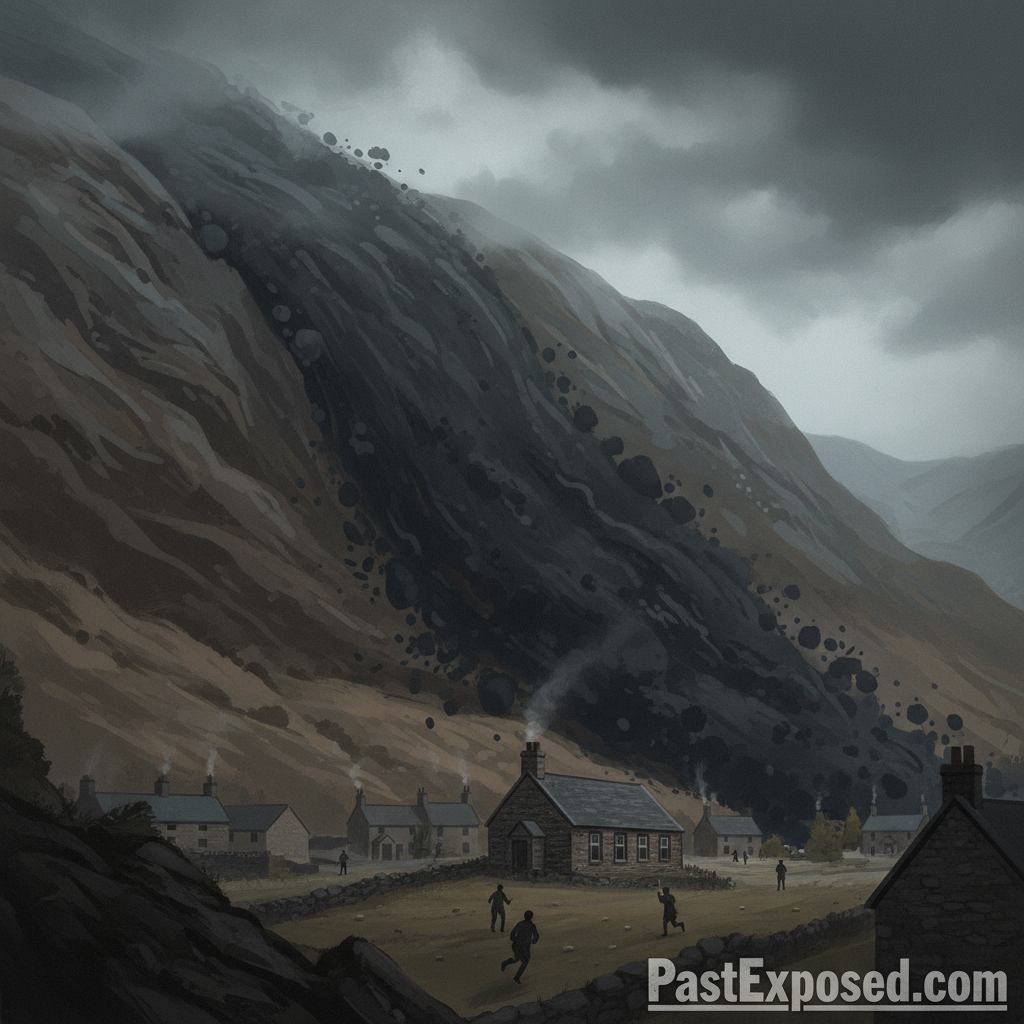
Two million tons of coal waste, rocks, mud, and water liquefied and surged down the mountainside at speeds estimated at 30-40 miles per hour. Witnesses described it as a black wave, rolling and tumbling, consuming everything in its path. The sound was like thunder, an express train, an avalanche of darkness.
The debris avalanche struck Pantglas Junior School first, directly and with devastating force. The school building—a solid structure of brick and stone—was crushed like cardboard. Classrooms collapsed instantly. Children and teachers were buried under tons of black sludge and rubble.
But the avalanche didn’t stop at the school. It continued down into the village, destroying a farm, nineteen houses, and part of the village pub. The wave finally came to rest when it hit a railway embankment that acted as a barrier, preventing even more destruction.
When the roar finally stopped, an eerie silence fell over Aberfan. The school had simply disappeared beneath a 30-foot-high mound of coal waste. Houses were buried. The entire lower part of the village was covered in black sludge.
And then the screaming began.
The Rescue: A Race Against Time
Within minutes, miners—men who spent their lives working underground, who understood better than anyone the horror of being trapped and buried—dropped their tools and ran to the school. They didn’t wait for orders or equipment. They began digging with their bare hands.
Parents, mothers and fathers who had just kissed their children goodbye that morning, arrived in shock and panic. They clawed at the debris, screaming their children’s names, digging frantically in the slim hope of finding them alive.
More miners arrived from surrounding collieries. Rescue equipment was brought in. Police and emergency services from across South Wales converged on Aberfan. But in those first crucial hours, it was the miners and parents, working with desperate urgency, who led the rescue.
Tragically, most of the children died instantly or within minutes from crushing injuries and asphyxiation. The force of the avalanche and the weight of the waste made survival almost impossible. But there were survivors—children and adults pulled from the wreckage, disoriented, injured, but alive.
As the day wore on, the rescues became increasingly rare. What had been a rescue operation gradually, heartbreakingly, became a recovery operation. Bodies were carefully extracted from the debris and laid out for identification. Parents faced the unbearable task of identifying their children’s bodies.
The Final Count
By the time the last body was recovered, the death toll was devastating:
- 116 children aged 7 to 10 years old
- 28 adults including 5 teachers
- Total: 144 dead
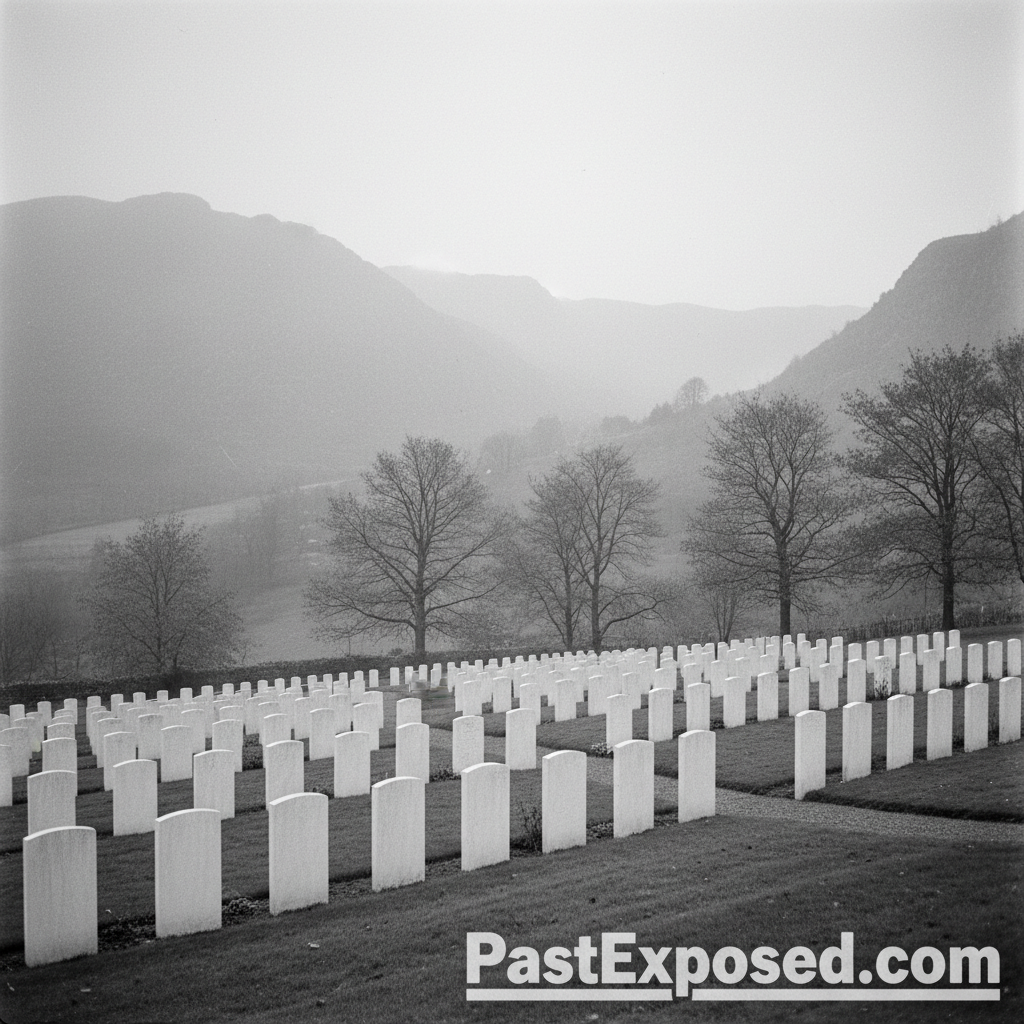
Almost half of the school’s students were killed. An entire generation of Aberfan’s children was wiped out in five minutes. The dead children were buried together in a long line of graves in the hillside cemetery—a heartbreaking testament to a preventable tragedy.
Among the dead were entire sibling groups. Parents lost all their children. Some families lost grandparents who had been in the path of the slide. The village, population approximately 5,000, knew almost everyone who died.
The Investigation: Blame and Responsibility
A tribunal of inquiry was immediately established under Lord Justice Edmund Davies. The hearings lasted 76 days and heard from 136 witnesses. The findings were damning.
The tribunal concluded:
“The Aberfan disaster is a terrifying tale of bungling ineptitude by many men charged with tasks for which they were totally unfitted, of failure to heed clear warnings, and of total lack of direction from above. Not villains but decent men, led astray by foolishness or by ignorance or by both in combination, are responsible for what happened at Aberfan.”
Key failures identified:
1. Dangerous Tip Placement: Tip Number 7 was built on top of natural springs and streams. Water is the enemy of waste tips—it saturates the material, increases weight, and reduces stability. Building on springs was catastrophically negligent.
2. Ignored Warnings: Complaints from residents about tip instability had been repeatedly dismissed. Engineers had noted concerns but nothing was done. Small slides had occurred but were considered “normal.”
3. No Proper Surveys: The National Coal Board never properly surveyed the ground beneath the tips. If they had, they would have discovered the springs and streams. The tips were built with no understanding of what lay beneath them.
4. Poor Communication: Information about tip instability within the Coal Board was not properly communicated or acted upon. Bureaucratic confusion meant warnings never reached decision-makers.
5. Lack of Regulation: Astonishingly, coal tips were not subject to government regulation or inspection. The Coal Board essentially policed itself, with predictable results.
The tribunal laid primary blame on the National Coal Board and specifically criticized seven individuals for their failures. However, despite the devastating findings, no criminal charges were ever filed. No one was prosecuted. No one went to jail for the deaths of 116 children.
The Fundraising Scandal
In the wake of the disaster, Britain and the world responded with an outpouring of sympathy and financial support. A disaster fund was established, and donations poured in from across the UK and internationally. Eventually, the fund reached £1.75 million (approximately £35 million or $45 million in today’s money).
The money was meant to help the bereaved families and rebuild the community. But what followed became a second tragedy—a bureaucratic scandal that compounded the community’s suffering.
The remaining coal tips above Aberfan obviously had to be removed—no one could live with those black mountains looming overhead any longer. But removing the tips cost money. And incredibly, the government demanded that the Aberfan Disaster Fund pay £150,000 toward the cost of removing the tips that never should have been there in the first place.
The community was outraged. They were being forced to pay to remove the danger that had killed their children—a danger created by the Coal Board’s negligence. But they had no choice. The money was taken from the fund intended for bereaved families.
It took until 1997—31 years later—for the British government to finally return the £150,000 (without interest) to the fund. It was a shameful chapter that added insult to the terrible injury Aberfan had suffered.
The Survivors’ Burden
The children who survived Pantglas Junior School carried scars—physical and psychological—for the rest of their lives. Many suffered from what we would now recognize as post-traumatic stress disorder (PTSD), though in 1966 mental health support was minimal, especially for children.
Survivors reported nightmares, anxiety, survivor’s guilt. Some developed claustrophobia or panic attacks. Many struggled with depression. Several survivors have spoken publicly about feeling they shouldn’t have survived when their friends died.
For the parents who lost children, the grief was unbearable. Multiple families left Aberfan, unable to remain in a place that reminded them constantly of their loss. Some marriages broke under the strain. The community’s mental health crisis lasted for generations.
Even those not directly affected by deaths in their immediate families suffered. In a village of 5,000 people, everyone knew someone who died. The collective trauma was immense and pervasive.
The Memorial Garden
In the years following the disaster, the site where Pantglas Junior School once stood was cleared and transformed into a memorial garden. It’s a peaceful place now, with flowering trees and benches—a stark contrast to the horror that occurred there.
The original cemetery, where 81 of the children are buried together in two long arcs, remains Aberfan’s most visible monument to the disaster. The graves, many marked with child-sized headstones showing ages like “8 years” or “9 years,” are a heartbreaking reminder of the young lives lost.
Every year on October 21, a memorial service is held. Survivors, family members, and community members gather to remember. The names of the dead are read aloud. Silence is observed at 9:15 AM—the moment the tip failed.
The Legacy: Changes in Law and Regulation
Aberfan forced Britain to confront the dangers of unregulated mining waste. The disaster led to significant changes:
- Mines and Quarries (Tips) Act 1969: Introduced regulations and safety standards for mining waste tips
- Regular Inspections: Tips became subject to government inspection and monitoring
- Removal of Dangerous Tips: Hundreds of unstable tips were removed or stabilized across Wales
- Recognition of Mental Health Impact: Aberfan became a case study in community trauma and PTSD, influencing how disaster mental health support is provided
The disaster also raised broader questions about corporate responsibility, government regulation, and the balance between industrial profit and public safety—questions that remain relevant today.
The Question That Haunts
The most painful aspect of Aberfan is that it was entirely preventable. The tips didn’t have to be built above the village. They didn’t have to be built on springs. The warnings didn’t have to be ignored. The children didn’t have to die.
Every investigation, every inquiry, every analysis reaches the same conclusion: this disaster was caused by human negligence, bureaucratic failure, and the prioritization of convenience over safety.
The parents of Aberfan knew this. They had warned. They had complained. They had begged for the tips to be removed or relocated. And they were told not to worry, that everything was fine, that mining was important to Wales.
And then, on a misty October morning, their worst fears were realized.
Aberfan Today
Today, Aberfan is a quiet Welsh village. The tips are gone—the mountains of waste removed and the hillside partially restored. The memorial garden is peaceful. Life continues.
But the disaster remains woven into the fabric of the community. Survivors and family members still live there. The cemetery on the hill is still visited. The memorial garden still holds its annual service.
Tourism to Aberfan is treated with great sensitivity. This is not an attraction but a memorial, a place of mourning. Visitors are asked to be respectful, to remember that this is a living community still processing an unimaginable loss.
In recent years, there have been calls for a national memorial, greater recognition, and continued compensation for survivors and families. The fiftieth anniversary in 2016 brought renewed attention to the disaster and its ongoing impact.
On October 21, 1966, at 9:15 in the morning, a generation of children went to school and never came home. One hundred and sixteen young lives—futures, dreams, possibilities—were buried under two million tons of coal waste that should never have been there. The disaster destroyed families, traumatized a community, and exposed the deadly consequences of negligence and ignored warnings. The coal tips are gone now from the mountainside above Aberfan. The school was never rebuilt on that site—only a memorial garden stands there, peaceful and green. But the scars remain, carried by survivors now in their sixties and seventies, passed down through families and generations, embedded in the collective memory of Wales and Britain. Aberfan stands as a warning from history: that convenience must never triumph over safety, that warnings must be heeded, that those in positions of power have a duty to protect those in their care. And it stands as a testament to a small Welsh community that suffered an unthinkable tragedy, buried their children together on a hillside, and somehow found the strength to continue. In the memorial garden, on quiet mornings when mist hangs over the valley as it did on that terrible day, you can almost hear the echo of children’s voices, laughter from classrooms that no longer exist, the promise of lives that should have been lived. One hundred and sixteen names on a memorial. One hundred and sixteen reasons why we must never forget Aberfan.