
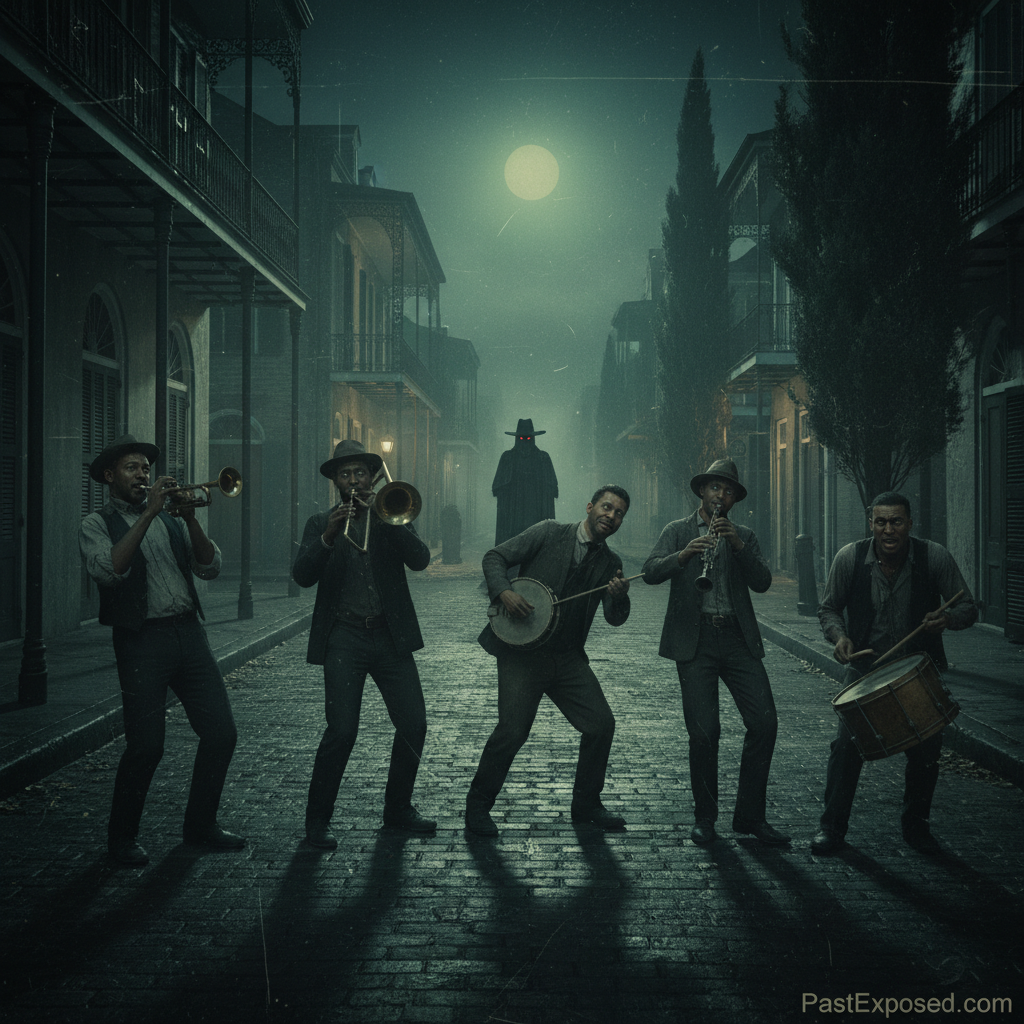
In May 1918, as World War I raged in Europe, the city of New Orleans faced a terror of its own. A mysterious killer began breaking into homes under cover of darkness, attacking sleeping victims with an axe or straight razor. But this was no ordinary serial killer. The Axeman wrote letters to newspapers, claimed to be a demon from hell, and promised to spare any home that played jazz music on a specific night. What followed was one of the strangest and most terrifying crime sprees in American history—a case that remains officially unsolved over a century later.
The First Attacks: A Pattern Emerges
The first confirmed Axeman attack occurred on the night of May 22-23, 1918, though some investigators believe similar earlier crimes may have been connected. Joseph and Catherine Maggio, Italian grocers living behind their store on Upperline Street, became the killer’s first known victims.
Neighbors discovered the crime scene the following morning after noticing the Maggio’s grocery remained closed past opening time. Joseph Maggio lay dead in his bed, his throat slashed and his head split open by an axe. His wife Catherine was barely alive, with similar horrific wounds, but died before medical help could arrive.
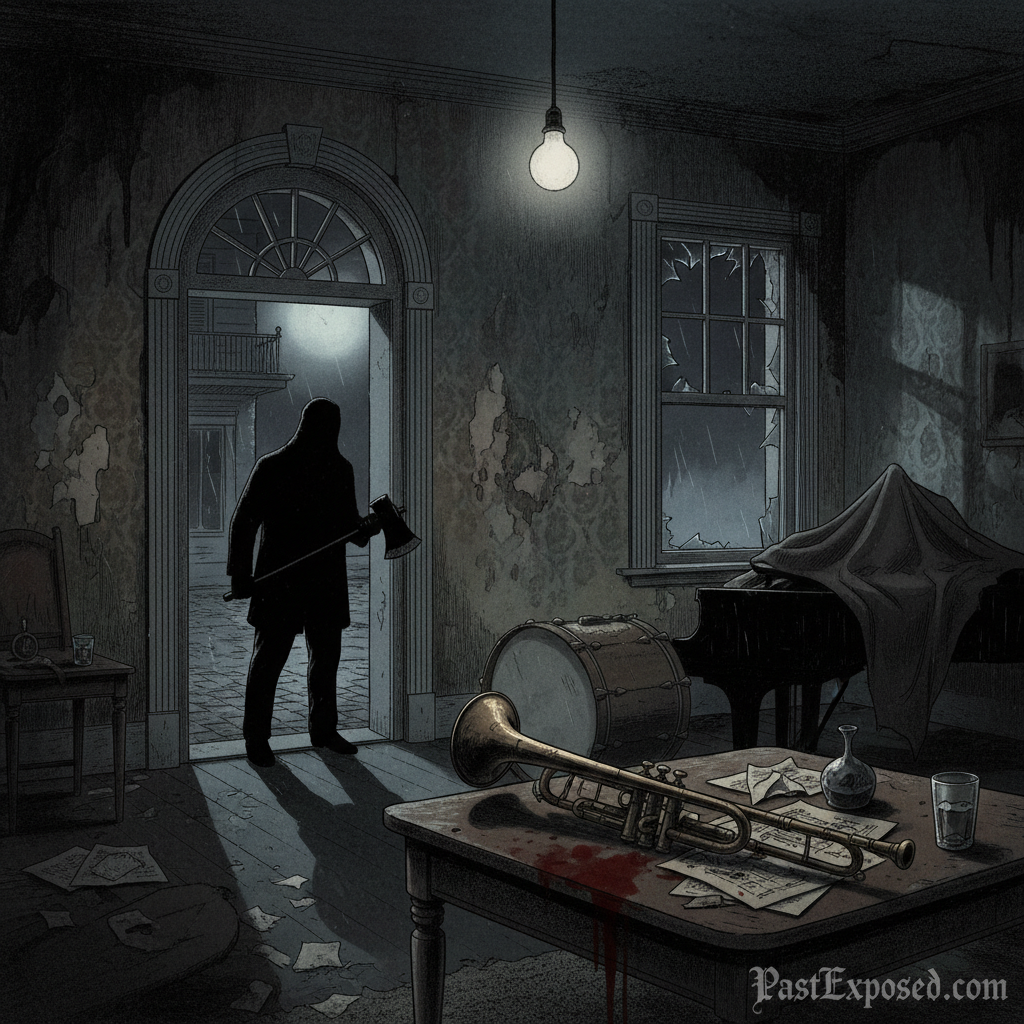
The investigation revealed a chilling methodology that would become the Axeman’s signature: The killer had chiseled out a panel from the back door, reaching through to unlatch it from inside. Once inside, he used the residents’ own axe—found in the bathroom, carefully wiped clean. A straight razor from the home had been used to slash their throats.
Even more disturbing, someone had drawn a message in chalk near the scene: “Mrs. Maggio will sit up tonight just like Mrs. Toney.” No one knew who Mrs. Toney was, or what the cryptic message meant. It was the first of many puzzles the Axeman would leave behind.
Terror Spreads Through the City
On June 28, 1918, just weeks after the Maggio murders, the Axeman struck again. Louis Besumer, a grocer, and his common-law wife Harriet Lowe were attacked in their home. Both survived but were critically injured. Harriet would die months later, her final words accusing Besumer of being a German spy—a claim that added confusion to an already baffling case.
Five days later, on the night of August 5, Mrs. Edward Schneider woke to find an intruder standing over her bed, axe raised. She screamed. The attacker brought the axe down, striking her in the face before fleeing. Though heavily pregnant at the time, Mrs. Schneider survived and later gave birth to a healthy child. She described her attacker as a large man in dark clothing, but the lighting was poor and the attack swift.
Then came Joseph Romano. On August 10, Romano was attacked in his home while his two nieces slept in an adjacent room. The young girls heard the commotion and rushed in to find their uncle staggering from his bedroom, blood pouring from his head. “The Axeman got me,” he gasped before collapsing. Romano died two days later, never having seen his attacker’s face clearly enough to provide a useful description.
New Orleans descended into panic. Hardware stores sold out of locks, bolts, and guns. Families barricaded themselves inside at night. People with Italian surnames—most of the victims thus far—lived in particular fear, wondering if they were being specifically targeted.
The Letter: “I Am the Axeman”
Then, on March 13, 1919, after months of silence, a letter arrived at the Times-Picayune newspaper. Written in dramatic, theatrical prose, it remains one of the most bizarre documents in American criminal history:
“Hell, March 13, 1919
Esteemed Mortal:
They have never caught me and they never will. They have never seen me, for I am invisible, even as the ether that surrounds your earth. I am not a human being, but a spirit and a demon from the hottest hell. I am what you Orleanians and your foolish police call the Axeman.
When I see fit, I shall come and claim other victims. I alone know whom they shall be. I shall leave no clue except my bloody axe, besmeared with blood and brains of he whom I have sent below to keep me company…
Now, to be exact, at 12:15 (earthly time) on next Tuesday night, I am going to pass over New Orleans. In my infinite mercy, I am going to make a little proposition to you people. Here it is:
I am very fond of jazz music, and I swear by all the devils in the nether regions that every person shall be spared in whose home a jazz band is in full swing at the time I have just mentioned. If everyone has a jazz band going, well, then, so much the better for you people. One thing is certain and that is that some of your people who do not jazz it on Tuesday night (if there be any) will get the axe.
Well, as I am cold and crave the warmth of my native Tartarus, and it is about time I leave your earthly home, I will cease my discourse. Hoping that thou wilt publish this, that it may go well with thee, I have been, am and will be the worst spirit that ever existed either in fact or realm of fancy.
—The Axeman”
Was the letter genuine or a hoax? Police couldn’t be sure, but they had no choice but to take it seriously. The deadline mentioned in the letter—Tuesday, March 19, 1919, at 12:15 AM—gave New Orleans exactly six days to prepare.
The Night New Orleans Played Jazz
What happened next was unprecedented in American criminal history. On the night of March 18-19, 1919, the entire city of New Orleans erupted in jazz music.
Dance halls threw their doors open for marathon jazz sessions. Nightclubs extended their hours. Private parties filled every neighborhood. Those who couldn’t afford to hire bands gathered around phonographs, playing jazz records at full volume. The sound of trumpets, saxophones, and drums filled the humid Louisiana air as midnight approached.
Musicians composed songs mocking the killer, including one titled “The Mysterious Axeman’s Jazz (Don’t Scare Me Papa).” The chorus went:
“I don’t know who you are, Mister Axeman,
But jazz will swing you high as the moon,
So put down that big, sharp razor,
And dance to my dreamy tune!”
As the appointed hour came and went, New Orleans held its breath. When dawn broke on March 19 with no new attacks, the city erupted in celebration. The Axeman, it seemed, had kept his word.
Or had he simply been amused by the spectacle? Or terrified by a city that refused to cower? We’ll never know.
More Victims and Near Misses
The reprieve didn’t last. On August 10, 1919—exactly one year after the Romano murder—the Axeman struck again. Steve Boca, a grocer, woke to find an intruder in his bedroom. He was attacked with his own axe, suffering severe head wounds. Boca stumbled to a neighbor’s house for help, leaving a trail of blood. He survived but could provide no useful description of his attacker.
Two weeks later, on August 3, a young woman named Sarah Laumann heard someone trying to break into her home. She screamed, and the would-be intruder fled—but investigators found chisel marks on her door matching the Axeman’s method.
Then came September 3, 1919, and the final attack. Nineteen-year-old Mike Pepitone was murdered in his bed while his wife and six children slept in adjacent rooms. Mrs. Pepitone heard a commotion and rushed to her husband’s room, arriving in time to see a large man in dark clothing fleeing through a doorway. Mike Pepitone died before sunrise, his skull crushed by multiple axe blows.
And then, as suddenly as he had appeared, the Axeman vanished. No more chisel marks on doors. No more midnight attacks. No more victims.
Theories and Suspects
Who was the Axeman? Over a century of investigation and speculation has produced numerous theories but no definitive answers:
The Mafia Connection Theory
Most victims were Italian-American grocers. Some investigators believed the attacks were actually hits disguised to look like a serial killer’s work—possibly extortion gone wrong, or retribution against grocers who refused to pay protection money to organized crime. The Axeman methodology might have been a cover for more mundane criminal motives.
However, this theory struggles to explain the attacks on non-Italians, the bizarre letter, or why such elaborate staging would be necessary.
The Mumfre Theory
In December 1920, over a year after the last attack, a woman named Esther Albano (formerly Mrs. Mike Pepitone, widow of the final victim) shot and killed a man named Joseph Mumfre in Los Angeles. At her trial, she claimed Mumfre was the Axeman—that she had recognized him from the night of her husband’s murder.
Detective John Dantonio investigated and claimed Mumfre had been released from prison shortly before the attacks began and was incarcerated during the period when attacks ceased (late 1918-early 1919). The timing was compelling. Mrs. Albano served only three years for the killing.
But the case was never officially closed, and skeptics note that prison records are ambiguous, witness identification was questionable, and Mrs. Albano might have simply wanted revenge against anyone she could blame.
The Copycat Theory
Some researchers believe there was no single Axeman—that multiple attackers copied the methodology after reading newspaper accounts. This would explain inconsistencies in victim selection and attack patterns. The famous letter might have been written by someone entirely unconnected to any of the crimes.
The Military Connection
The attacks began during WWI and ended shortly after the war’s conclusion. Some have speculated the Axeman might have been a soldier on leave or stationed nearby, his crimes ending when he was deployed or discharged. This could explain the sudden cessation of attacks.
The Supernatural Explanation
The killer’s letter claimed demonic origins, and superstitious New Orleanians whispered about voodoo curses, evil spirits, and supernatural vengeance. While modern investigators dismiss such theories, they reflect the genuine terror and mystification the Axeman inspired.
The Crime Scene Evidence
What made the Axeman particularly terrifying was his methodology’s consistency and his apparent invulnerability to detection:
- The Entry Method: Always through a chiseled panel in a door, never breaking glass or forcing locks
- The Weapon: Always the victim’s own axe or hatchet, taken from their property
- The Timing: Always at night, attacking sleeping victims
- The Stealth: Often attacked multiple people in a home without others hearing
- The Invisibility: Despite New Orleans police surveillance, increased patrols, and public vigilance, he was never caught in the act
Forensic investigation in 1918-1919 was primitive by modern standards—no DNA analysis, no security cameras, limited fingerprinting capabilities. The Axeman seemed to understand this, always wiping his weapon clean and leaving minimal physical evidence.
The Cultural Impact
The Axeman of New Orleans left an indelible mark on American culture and criminal history:
Jazz’s Dark Moment: The association between jazz music and a serial killer created one of the genre’s strangest historical footnotes. Songs about the Axeman became part of jazz history, though few are remembered today.
Media Sensation: The case represented one of the first times a serial killer communicated directly with the public through newspapers, predating more famous cases like the Zodiac Killer by decades.
Public Psychology: The communal response—an entire city playing jazz music to ward off a killer—represented a unique moment of collective action against terror.
Literature and Film: The case has inspired numerous books, films, and television shows, including episodes of American Horror Story and multiple true crime documentaries.
Modern Investigations
In recent decades, historians and researchers have attempted to solve the case using modern techniques:
Criminologist Miriam Davis examined all available evidence and concluded the attacks were likely Mafia-related, using the “Axeman” persona as cover. However, her conclusions remain disputed.
Other researchers have used geographical profiling—analyzing attack locations to determine where the killer likely lived or worked. Results suggested a residence in or near the French Quarter, but this was never definitively confirmed.
The passage of over 100 years means all suspects, victims, and witnesses are long dead. Physical evidence has been lost or destroyed. The case will almost certainly never be officially solved.
The Victims
Lost in the sensational aspects of the case are the real people who died or were permanently injured:
- Joseph and Catherine Maggio – murdered
- Louis Besumer – severely injured
- Harriet Lowe – died from her injuries
- Mrs. Edward Schneider – permanently scarred
- Joseph Romano – murdered
- Steve Boca – permanently disabled
- Mike Pepitone – murdered, leaving a widow and six children
These were mostly working-class immigrants, grocers and laborers trying to build lives in a new country. Their deaths or injuries shattered families and left communities traumatized.
Why It Matters
The Axeman case represents a fascinating moment in American criminal history—the intersection of immigration, urban crime, media sensationalism, cultural identity, and the birth of jazz as America’s great art form.
It also demonstrates how terror can grip a city, and how communities respond to that terror. New Orleans didn’t cower—it fought back with music, with defiance, with a refusal to let fear win. That the entire city played jazz music to ward off a killer remains one of the most remarkable moments in either musical or criminal history.
On warm New Orleans nights, when jazz music drifts through the French Quarter and the Mississippi River flows dark and silent past the city, it’s easy to imagine that spring night in 1919 when an entire city played music to keep a monster at bay. The Axeman of New Orleans vanished more than a century ago—arrested, killed, or simply moved on. But the mystery remains, as does the question: Did he stop because of the music? Or did the music simply mark the moment when a city refused to be a victim? We’ll never know. The Axeman took his secrets to the grave—wherever that grave might be. And somewhere in the archives, his letter remains, with its bizarre promise and its cryptic signature. “I have been, am and will be the worst spirit that ever existed either in fact or realm of fancy.” Perhaps he was right. Or perhaps he was just a man with an axe, who understood that sometimes the most terrifying thing is not what you see, but what you imagine lurking in the darkness, waiting for the music to stop.