
In the depths of the Great Depression, as Cleveland struggled with poverty and despair, a serial killer stalked the city’s poorest neighborhoods. Between 1934 and 1938, at least 12 dismembered bodies were discovered in the industrial wasteland of Kingsbury Run and surrounding areas. The victims were decapitated, their bodies expertly carved into pieces and scattered like discarded trash. Despite one of the largest manhunts in American history—led by legendary lawman Eliot Ness himself—the killer was never caught. This is the story of the Cleveland Torso Murderer, also known as the Mad Butcher of Kingsbury Run, one of America’s most terrifying unsolved serial killer cases.
The First Discovery: A Grim Beginning
On September 5, 1934, a young beachcomber named Frank LaGassie was searching for driftwood along the rocky shore of Lake Erie near Euclid Beach. What he discovered would haunt Cleveland for years to come: the lower half of a woman’s torso, washed up on the beach.
The torso had been cleanly severed at the waist and at the thighs. The precision of the cuts suggested someone with anatomical knowledge—possibly a doctor, butcher, or medical student. The victim’s head, arms, and upper torso were never found. Chemical analysis revealed the body had been treated with a preservative, suggesting the killer had kept it for some time before disposal.
Police identified the victim as an unidentified woman between 25-30 years old. They called her “Jane Doe I,” never suspecting she was the first of many.
Almost exactly one year later, on September 23, 1935, two young boys playing in the scrubland of Kingsbury Run—a desolate ravine carved by a creek running through Cleveland’s industrial area—stumbled upon a horrifying scene: two naked, headless bodies lying in the weeds at the bottom of the gulley.
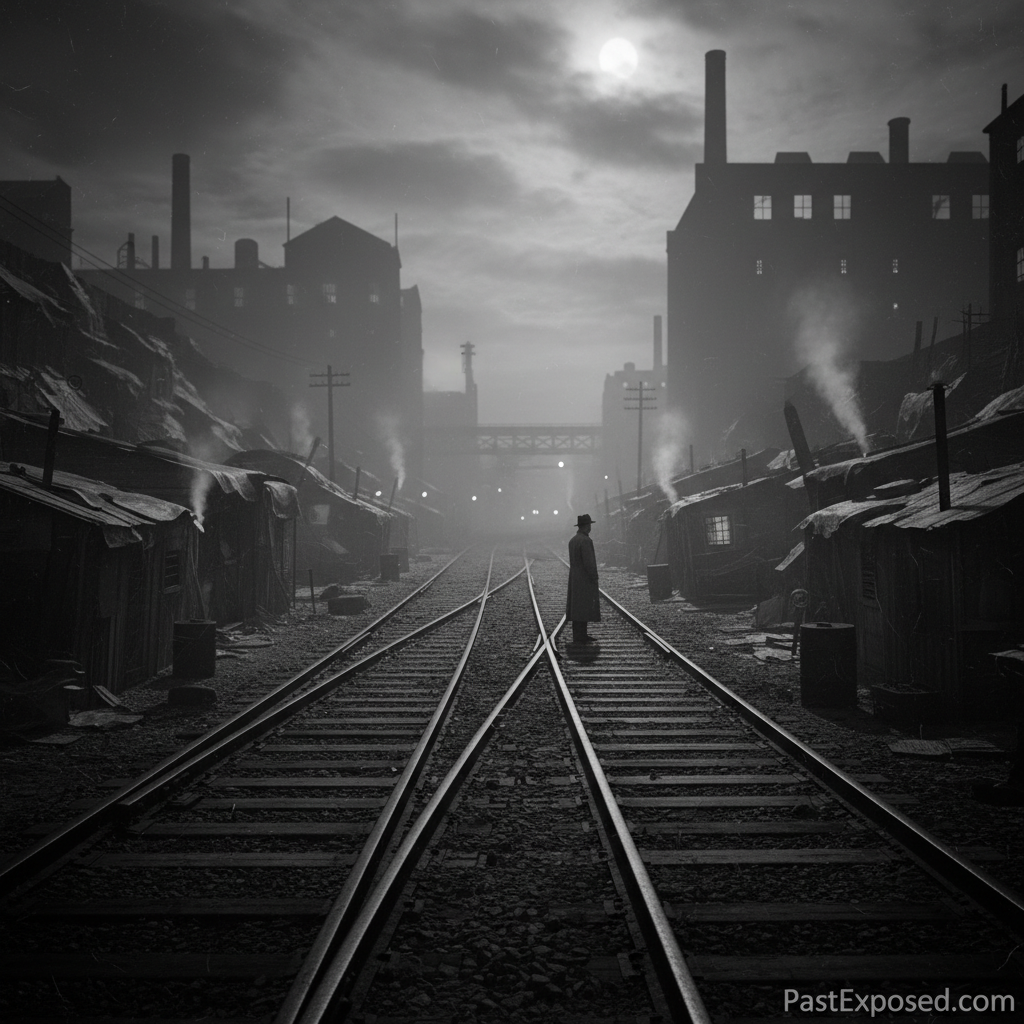
Kingsbury Run: The Killer’s Hunting Ground
Kingsbury Run was one of Cleveland’s bleakest neighborhoods. This 60-foot-deep ravine ran for miles through the city’s poorest district, a landscape of factories, railroad tracks, and shantytowns where desperate men rode the rails looking for work during the Depression.
The area was home to hundreds of transients—homeless people, hobos, prostitutes, and criminals living in makeshift camps. It was the perfect hunting ground for a serial killer: victims no one would miss, crime scenes isolated from witnesses, and a transient population that made investigation nearly impossible.
The two bodies discovered in September 1935 were both male. The first victim, dubbed “Edward Andrassy,” was identified through fingerprints. He was a 28-year-old drifter known to police, with a history of petty crime. His body bore rope marks on his wrists, suggesting he had been bound before death. The cause of death: decapitation while he was still alive. The head had been severed between the third and fourth cervical vertebrae with surgical precision.
The second victim was never identified. He was approximately 40-45 years old, and like Andrassy, had been decapitated, emasculated, and carefully dismembered. His head was found nearby. Both bodies had been drained of blood and washed clean before being dumped.
The killer had a pattern, and Cleveland now had a serial murderer.
The Body Count Rises
Over the next three years, more victims were discovered, each adding to the horror:
January 1936: Pieces of a woman’s torso and thighs were found in Kingsbury Run. Her head was discovered in a burlap sack. She was never identified but was estimated to be about 40-42 years old. Like previous victims, she had been expertly dismembered.
February 1936: The remains of a 41-year-old prostitute named Florence Polillo were discovered in pieces across two locations: behind a butcher shop and in an alley. Her body had been cut into approximately 20 pieces and distributed in baskets. Her head was never found.
June 1936: A severed head was pulled from Kingsbury Run by two boys fishing. Days later, more body parts were found nearby. The victim was a young man, approximately 20-25 years old, tattooed with nautical symbols suggesting he was a sailor. He was never identified.
July 1936: Another headless, dismembered male body was discovered near Kingsbury Run. The victim was approximately 40 years old. Like others, he was never identified and had been expertly dissected.
September 1936: The upper half of a male torso was found floating in a pool near Kingsbury Run. The rest of the body was never located. The victim was believed to be in his mid-twenties.
February 1937: The upper half of a woman’s torso washed up on the shore of Lake Erie. Her head was never found. Chemical testing revealed the body had been in the water for 3-4 months, meaning she had been killed in late 1936.
June 1937: A woman’s skeleton, with the skull separated from the body, was discovered under the Lorain-Carnegie Bridge. She had been dead for approximately a year. Later identified through dental records as Rose Wallace, a 40-year-old prostitute.
July 1937: Parts of a dismembered body were found floating in the Cuyahoga River, wrapped in burlap and newspaper dated June 1936. The victim was never identified.
April 1938: A woman’s leg was pulled from the river. More body parts were soon discovered, including a torso cut in half at the waist. The victim was never identified.
August 1938: The bodies of two more victims were found at a city dump. Both had been decapitated and dismembered. One was identified as Jane Doe; the other as a man named Robert Robertson.
The pattern was consistent and terrifying: decapitation (often while alive), expert dismemberment, bodies drained of blood and washed clean, heads often missing or found separately, victims typically from society’s margins—prostitutes, homeless people, transients.
Enter Eliot Ness
In 1935, the same year the Torso Murders began, a legendary lawman arrived in Cleveland. Eliot Ness, famous for bringing down Al Capone in Chicago, had been appointed Safety Director of Cleveland—essentially the city’s top law enforcement official.
Ness had built his reputation on meticulous investigation, modern forensic techniques, and incorruptible determination. If anyone could catch the Torso Murderer, it should have been him. But the Mad Butcher would prove to be Ness’s greatest failure.
Ness assembled a task force, consulted with forensic experts, and personally supervised the investigation. He brought in criminal psychologists—a relatively new field—to create a profile of the killer. The profile suggested:
- Male, between 30-50 years old
- Physically strong (to carry and manipulate bodies)
- Knowledge of human anatomy (medical training, butcher experience, or mortuary work)
- Access to a private location where he could kill and dismember victims
- Likely lived or worked near Kingsbury Run
- Possibly drove a car or truck to transport bodies
- May have posed as a doctor or authority figure to lure victims
Despite thousands of hours of investigation, hundreds of interviews, and extensive forensic analysis, Ness made no progress. The killer left no fingerprints, no usable physical evidence, and no witnesses. It was as if he was a ghost.
The Desperate Measures
By August 1938, with the body count reaching at least 12 confirmed victims (possibly more), Cleveland was in a panic. The press hammered Ness daily. The public demanded action. Ness made a controversial and desperate decision.
On August 18, 1938, Ness led a massive raid on the shantytowns of Kingsbury Run. Police swept through the area, burning down the makeshift shelters and arresting hundreds of homeless people. Ness’s reasoning was twofold: remove potential victims from the killer’s hunting ground, and possibly catch the killer if he lived among the transient population.
The raid was widely condemned as cruel and ineffective. It destroyed the homes of innocent, desperate people without producing any real leads. Critics accused Ness of sacrificing the city’s most vulnerable residents to protect his reputation.
After August 1938, the confirmed Torso Murders stopped. Did the killer die? Was he arrested for another crime? Did he move to another city? Or did Ness’s raid somehow disrupt his activities? No one knows.
The Suspects: A Rogues’ Gallery
Over the years, several suspects emerged, though none were ever charged:
Dr. Francis Sweeney
The most compelling suspect was Dr. Francis Edward Sweeney, a physician who had studied surgery and worked as a medical orderly. Sweeney was an alcoholic whose life had deteriorated significantly by the mid-1930s. He was known to frequent the Kingsbury Run area and had the medical knowledge to perform the precise dismemberments.
Detective Peter Merylo, who spent years investigating the case, became convinced Sweeney was the killer. In August 1938, Eliot Ness personally interrogated Sweeney over several days. During questioning, Ness administered two separate polygraph tests. According to the polygraph operator, Sweeney failed both tests, showing deception when denying involvement in the murders.
However, Sweeney was a cousin of Congressman Martin L. Sweeney, a powerful political figure and bitter enemy of Eliot Ness. This connection made prosecution nearly impossible—any case would be seen as politically motivated. Shortly after the interrogation, Dr. Sweeney voluntarily committed himself to a Veterans Administration psychiatric hospital, where he remained for much of the rest of his life.
Intriguingly, after Sweeney’s hospitalization, the murders stopped. Even more telling: years later, Eliot Ness received taunting postcards signed “F.E.S.” that referenced the murders. Many believe these were from Francis Edward Sweeney.
Dr. Sweeney died in 1965, taking any secrets to his grave.
Other Suspects
Several other individuals were investigated:
- Frank Dolezal: Arrested in 1939 and confessed to killing one victim (Florence Polillo), but his confession was likely coerced. He died in police custody under suspicious circumstances before trial.
- Various transients and drifters: Hundreds were questioned, but none were linked to the crimes.
- “The Mad Doctor of Cleveland”: Various anonymous tips pointed to mysterious doctors or medical students, but these led nowhere.
Connected Murders?
Some researchers believe the Torso Murderer may have operated beyond Cleveland. Similar murders occurred in:
- New Castle, Pennsylvania (1925-1939): At least three dismembered bodies with similar characteristics
- Pittsburgh, Pennsylvania (1940s): Several headless, dismembered victims
- Youngstown, Ohio: Dismembered bodies found in 1940
If these were the same killer, the true victim count could be significantly higher than 12.
Modern Investigations
In recent decades, forensic scientists and historians have re-examined the case using modern techniques:
- DNA Analysis: Attempts have been made to extract DNA from preserved evidence, but contamination and degradation have made this difficult.
- Geographical Profiling: Modern criminal profilers have analyzed the locations where bodies were found, suggesting the killer likely lived or worked within a specific area of Cleveland.
- Historical Research: Investigators have examined period medical school records, hospital employment files, and mortuary records to identify individuals with the necessary skills.
In 1997, retired detective James Badal published a book arguing definitively that Dr. Francis Sweeney was the killer, presenting circumstantial evidence and the results of Ness’s interrogations.
The Victims: More Than Just Numbers
Lost in the sensational aspects of the case are the real people who died horrifically:
- Edward Andrassy – a troubled young man with a criminal past
- Florence Polillo – a 41-year-old woman trying to survive
- Rose Wallace – a 40-year-old prostitute
- At least nine other human beings whose names were never learned
These were Cleveland’s most vulnerable residents—people living on society’s margins, people easy to overlook, people whose disappearances went unnoticed. The killer understood this and exploited it ruthlessly.
Eliot Ness: A Legacy Tarnished
The Torso Murders haunted Eliot Ness for the rest of his life. The man who brought down Al Capone couldn’t catch a serial killer operating in his own city. The case damaged his reputation and may have contributed to his resignation as Safety Director in 1942.
Ness never spoke publicly about the case in detail, but those close to him knew it weighed on him. He died in 1957, believing he knew who the killer was (almost certainly Sweeney) but unable to prove it.
Why Couldn’t They Catch Him?
Several factors made the Torso Murderer nearly impossible to catch:
- Victim Selection: He targeted people society ignored—transients, prostitutes, homeless people whose disappearances went unnoticed.
- Crime Scene Management: Bodies were dumped in isolated areas, often in water or locations where evidence was contaminated or destroyed.
- Forensic Limitations: 1930s forensic science was primitive. No DNA testing, limited fingerprint databases, no security cameras.
- Expert Knowledge: The killer clearly had anatomical expertise, allowing him to dismember bodies efficiently and destroy identifying features.
- Private Kill Site: The killer almost certainly had a private location where he committed the murders and dismemberments. This location was never found.
- No Clear Motive: The killer’s motive remains unknown. There was no apparent sexual assault, no robbery, no obvious pattern linking victims beyond their vulnerability.
The Unanswered Questions
Nearly 90 years later, key questions remain:
- Was Dr. Francis Sweeney really the killer, or just a convenient suspect?
- Why did the murders stop after August 1938?
- Were the similar murders in other cities the same killer?
- How many total victims were there? (Some estimate as many as 20)
- Where was the primary kill site?
- What happened to the missing heads?
The Site Today
Kingsbury Run still exists, though it has changed dramatically. The shantytown
s are long gone, replaced by industrial development and urban renewal. Train tracks still run through the gulley. Occasionally, someone places flowers or a small memorial near the locations where bodies were found.
The Cleveland Police Museum has a section dedicated to the Torso Murders, displaying case files, photographs, and artifacts. It remains the museum’s most popular exhibit—a testament to the case’s enduring fascination.
The Cleveland Torso Murderer represents one of American criminal history’s most disturbing unsolved cases. For nearly four years, a killer operated with near impunity, claiming at least 12 victims (possibly more), outwitting one of America’s most famous lawmen, and vanishing without a trace. If Dr. Francis Sweeney was indeed the killer, he lived another 27 years after the murders stopped, his secret safe, his crimes unpunished. If it was someone else, the truth died with them decades ago. The victims—mostly anonymous, mostly forgotten—deserve to be remembered as more than just a body count in a sensational crime story. They were human beings who deserved justice, and justice was denied. In the end, the Mad Butcher of Kingsbury Run achieved a kind of immortality through his crimes, while his victims were reduced to numbers and Jane Does. The killer won. And somewhere in the dark history of Cleveland, in unmarked graves and forgotten corners, the secrets remain buried, waiting for answers that may never come.